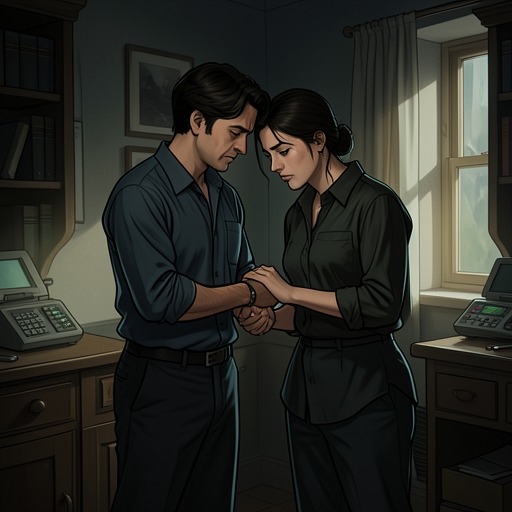
during Jacob Livingston and Daniel Livingston’s childhood
The Brothers Protect Their Mother
Their father repeatedly terrorized their mother, and the brothers learned to watch for danger and protect one another. During one confrontation, [Daniel](entity:character-recall-character-daniel-ff434f340c88) took their father’s violence onto himself after [Jacob Livingston](entity:character-recall-character-jacob-livingston-02d375c65c9c) and [Daniel Livingston](entity:character-recall-character-daniel-livingston-c3658ca8218e) intervened to protect their mother.
Their grandfather, [Zeyde](entity:character-recall-character-zeyde-d6e0f1737009), took the boys to [Sandy Hook](entity:location-recall-location-sandy-hook-151a2a40ae35) for a day at the beach. When they returned, their father had disappeared, taking his belongings and every trace of himself with him; the brothers never forgave themselves for believing they had caused the family’s upheaval.
before the present story
A Life Split Between Homes
[Jacob Livingston](entity:character-recall-character-jacob-livingston-02d375c65c9c) grew up in [New York City](entity:location-recall-location-7a11f2949ca3) and came to understand that he was gay while his family struggled to accept what that meant for his future. [Zeyde](entity:character-recall-character-zeyde-d6e0f1737009) later moved with him to [Israel](entity:location-recall-location-e1a1566e26c9), where Jacob Livingston served in the [Israel Defense Forces](entity:organization-recall-organization-755437ce5fcd) and remained close to the grandfather who had become his safest person.
After Zeyde died, Jacob Livingston returned to the United States and spent time with his mother before her sudden death. He then trained as a pastry chef in France and settled in [Los Angeles](entity:location-recall-location-a4be76fb5f5a), but travel and loss left him feeling perpetually temporary, as though he were always preparing to leave again.
the opening morning
The First Signs of Illness
[Jacob Livingston](entity:character-recall-character-jacob-livingston-02d375c65c9c) takes a cloud-gazing break outside the kitchen at [Il Ghiotto](entity:location-recall-location-il-ghiotto-d697c90fe3f2), where he works as a pastry chef. He is tired, dizzy, feverish, and increasingly weary of making cannoli and tiramisu, though he tries to finish the workday.
[Phil](entity:character-recall-character-phil-1845ea0a9d1e) notices Jacob Livingston’s fever and sends him home, anxious that he might have the swine flu. Jacob Livingston hands his assistant the instructions for a gluten-free dessert and leaves, unaware that the illness will soon strip away his ability to protect himself.
later that morning
The Discovery in the Bedroom
[Jacob Livingston](entity:character-recall-character-jacob-livingston-02d375c65c9c) returns to his apartment early and finds [Sander](entity:character-recall-character-sander-4d0428546e69) in bed with three other men. The visitors laugh as they dress and leave, while Sander dismisses the betrayal as insignificant and resents being caught.
Sick and furious, Jacob Livingston confronts Sander about the cheating, their unequal lives, and the money Sander spends pursuing an acting career. The discovery makes clear how little trust or partnership remains between them, but the argument quickly turns dangerous.
the same morning
The Beating and the Breakup
When [Jacob Livingston](entity:character-recall-character-jacob-livingston-02d375c65c9c) tells [Sander](entity:character-recall-character-sander-4d0428546e69) to find another place to live, Sander grabs him by the throat and shakes him. Jacob Livingston’s Krav Maga instincts let him break Sander’s nose, but his fever and weakness keep him from defending himself once Sander retaliates.
Sander kicks and punches him, then leaves after Jacob Livingston spits blood onto his hair and warns him about catching the illness. Jacob Livingston lies on the kitchen floor, badly injured and intermittently conscious; the assault ends the relationship, but it also exposes how familiar violence has become to him.
after Sander leaves
Help from the Neighbors
[Phil](entity:character-recall-character-phil-1845ea0a9d1e) calls to check on [Jacob Livingston](entity:character-recall-character-jacob-livingston-02d375c65c9c), and Jacob Livingston manages to ask for help. The building’s proprietors arrive after seeing [Sander](entity:character-recall-character-sander-4d0428546e69) leave covered in blood; Madeline finds Jacob Livingston injured on the floor and calls for assistance.
After receiving care, Jacob Livingston refuses Phil’s offer to persuade him to stay in [Los Angeles](entity:location-recall-location-a4be76fb5f5a). He says he is going to visit his brother, admitting that he is drawn to violence because it feels familiar, and prepares to take the bus despite his injuries.
the following day
The Journey North
[Jacob Livingston](entity:character-recall-character-jacob-livingston-02d375c65c9c) boards the bus toward his brother, bruised, feverish, and relying on pain medication. He notices two young passengers who appear frightened by the men boarding and recognizes the vulnerable atmosphere of the crowded bus.
He falls asleep, unaware of how far he has traveled. When he wakes, the bus driver demands that he get off, saying the passengers should not be exposed to his illness and asking for medical clearance he does not have.
that evening
Thrown Off the Bus
The bus driver tells [Jacob Livingston](entity:character-recall-character-jacob-livingston-02d375c65c9c) that they are in Santo Ignacio and puts him off at the [SeaView Motel](entity:location-recall-location-seaview-motel-dc6b20ba4408). He retrieves his duffel, watches the bus leave without him, and realizes that the day has carried him to a new low after betrayal, illness, and violence.
With no plan beyond finding shelter, Jacob Livingston goes into the motel office. The abrupt detour leaves him stranded in a town he had never heard of, but it begins the chain of encounters that will give him a reason to stay.
the same evening
Carl Offers a Room
[Carl Lents](entity:character-recall-character-carl-lents-5c9291ccdbb7), the owner of the [SeaView Motel](entity:location-recall-location-seaview-motel-dc6b20ba4408), sees [Jacob Livingston](entity:character-recall-character-jacob-livingston-02d375c65c9c)’s battered face and registers him without prying. He jokes with him, gives him a ground-floor room to spare him the stairs, and points out that an acute-care clinic will open in the morning.
Jacob Livingston insists that he has already been examined and needs only rest. Carl Lents nevertheless makes clear that help is available if he needs it, while Jacob Livingston settles into the unfamiliar motel room and falls asleep before taking the medications and water he set beside the bed.
after roughly two days at the motel
The Collapse and Rescue
[Carl Lents](entity:character-recall-character-carl-lents-5c9291ccdbb7) becomes concerned when [Jacob Livingston](entity:character-recall-character-jacob-livingston-02d375c65c9c) neither comes nor goes for a couple of days. He finds him unconscious and severely dehydrated, then calls paramedics to the room.
During the delirious rescue, Jacob Livingston mistakes [Jason Lents](entity:character-recall-character-jason-lents-3d74197600b1) for his dead grandfather and calls himself [Yasha](entity:character-recall-character-yasha-b434fae11c95). He imagines that he is wrestling angels, admits that he cannot hold on until morning, and kisses Jason Lents’s hand before allowing the rescuers to move him.
the next morning
Awakening in the Hospital
[Jacob Livingston](entity:character-recall-character-jacob-livingston-02d375c65c9c) wakes in the hospital and learns that [Carl Lents](entity:character-recall-character-carl-lents-5c9291ccdbb7) found him in time. [Alice](entity:character-recall-character-alice-c37947fad76f) explains how dangerously dehydrated he was, and Jacob Livingston agrees to see Carl Lents and the paramedic who treated him.
[Jason Lents](entity:character-recall-character-jason-lents-3d74197600b1) introduces himself as [JT](entity:character-recall-character-jt-b4e11a04ae23) and calls Jacob Livingston [Yasha](entity:character-recall-character-yasha-b434fae11c95), recalling the name [Jacob](entity:character-recall-character-jacob-9a0fda5e8753) used while delirious. Jacob Livingston remembers kissing his hand and is embarrassed, while JT’s warmth and green eyes begin to draw him in.
during Jacob Livingston’s hospital stay
A Patient and His Rescuer
[JT](entity:character-recall-character-jt-b4e11a04ae23) tells [Jacob Livingston](entity:character-recall-character-jacob-livingston-02d375c65c9c) that he should not accept being someone’s punching bag and challenges him to stop putting himself in danger. Jacob Livingston resents the judgment because JT does not know the history behind his choices, even as the accusation touches his shame.
[Carl Lents](entity:character-recall-character-carl-lents-5c9291ccdbb7) explains that Jacob Livingston had claimed he was in a fight club, then privately admits that the beating was domestic and that he lied out of embarrassment. He says the relationship is over, though he is still struggling to understand why he accepted the possibility of violence for so long.
near the end of the hospital stay
The Town That Holds On
[Carl Lents](entity:character-recall-character-carl-lents-5c9291ccdbb7) asks how long [Jacob Livingston](entity:character-recall-character-jacob-livingston-02d375c65c9c) expects to remain in town. Jacob Livingston has no answer; his brother cannot come immediately, and he has not yet decided what to do with his life in [Los Angeles](entity:location-recall-location-a4be76fb5f5a).
Carl Lents says [St. Nacho’s](entity:location-recall-location-st-nacho-s-3753dc035668) has a way of wrapping itself around visitors, though he himself never intended to stay. Jacob Livingston begins to wonder whether he might remain long enough to discover what kind of place has caught him.
after Jacob Livingston is discharged
The Ride in Mithril
[JT](entity:character-recall-character-jt-b4e11a04ae23) drives [Jacob Livingston](entity:character-recall-character-jacob-livingston-02d375c65c9c) back to the [SeaView Motel](entity:location-recall-location-seaview-motel-dc6b20ba4408) in his restored red Ford truck, which he calls [Mithril](entity:object-recall-object-mithril-ed8f419423a7). Jacob Livingston admires the truck and listens to JT describe how it came to belong to his family and how his father first came to town.
On the ride, JT asks why Jacob Livingston let [Sander](entity:character-recall-character-sander-4d0428546e69) hurt him. Jacob Livingston says he believed he could handle the danger until illness left him unable to defend himself, and that the experience has forced him to think about why he made violence possible in his life.
that afternoon
The Job in Los Angeles Disappears
[Jacob Livingston](entity:character-recall-character-jacob-livingston-02d375c65c9c) learns from [Phil](entity:character-recall-character-phil-1845ea0a9d1e) that the owner of [Il Ghiotto](entity:location-recall-location-il-ghiotto-d697c90fe3f2) has begun looking for a replacement while worrying that Jacob Livingston may have swine flu. The prospect of losing his job makes returning to [Los Angeles](entity:location-recall-location-a4be76fb5f5a) less certain, especially when the replacement may be Giorgio, the owner’s favored pastry chef.
Jacob Livingston asks Phil to arrange for [Sander](entity:character-recall-character-sander-4d0428546e69) to collect his belongings while he is away and to protect the apartment. He then calls [Daniel Livingston](entity:character-recall-character-daniel-livingston-c3658ca8218e), who cannot come until the weekend, leaving Jacob Livingston with several days in Santo Ignacio and no immediate reason to leave.
that evening
An Invitation to the Support Group
[JT](entity:character-recall-character-jt-b4e11a04ae23) visits [Jacob Livingston](entity:character-recall-character-jacob-livingston-02d375c65c9c) and asks him to trust him enough to attend a domestic-violence support group. Jacob Livingston initially refuses, expecting to feel out of place among women and insisting that he already understands what they would tell him.
JT argues that attending once could still give him something, even if it only confirms that the group is not for him. Jacob Livingston agrees because he trusts JT’s intentions, though he remains unsure whether he trusts his own judgment around the man.
that evening
The First Meeting
At the [Stop Partnership in Violence](entity:organization-recall-organization-stop-partnership-79845eec7db6) meeting, [Jacob Livingston](entity:character-recall-character-jacob-livingston-02d375c65c9c) is the only man in a circle of women, and their pity and suspicion make him feel exposed. When [Alice](entity:character-recall-character-alice-c37947fad76f) invites him to explain why he is there, he insists that he does not belong and leaves before he can say more.
[Mary Catherine Jensen](entity:character-recall-character-mary-catherine-jens-3f06bc3c00b4) follows him outside and tells him that she is not a victim either. She explains that no one wants to be reduced to the abuse they endured, and offers him a coffee and a conversation instead of demanding a public confession.
immediately after the meeting
A Conversation Over Coffee
[Mary Catherine Jensen](entity:character-recall-character-mary-catherine-jens-3f06bc3c00b4) and [Jacob Livingston](entity:character-recall-character-jacob-livingston-02d375c65c9c) talk over coffee. He learns that she owns [Miss Independence Pies](entity:location-recall-location-miss-independence-pi-3a32104282b8) and that she left her abusive husband after her son was hurt; her calm directness reminds Jacob Livingston of his mother.
She tells him to offer himself the same compassion he feels for her and to stop treating his own abuse as fundamentally different because he is a man. Jacob Livingston still insists the situation is over, but Mary Catherine Jensen makes him consider that surviving an abusive relationship is not the same as deserving or choosing it.
the next morning
A Place in the Bakery
[Jacob Livingston](entity:character-recall-character-jacob-livingston-02d375c65c9c) arrives at [Miss Independence Pies](entity:location-recall-location-miss-independence-pi-3a32104282b8) and discovers several women from the support group working there. Some challenge the way he spoke at the meeting, and he tries to explain that he never meant to dismiss their experiences, though he still minimizes the danger he faced.
[Muse](entity:character-recall-character-muse-5f06f71968a6) embraces him and tells him that being capable of self-defense does not erase the power he gives away to people he loves. The women let him into their work, and Jacob Livingston begins using his pastry-chef skills to help [Mary Catherine Jensen](entity:character-recall-character-mary-catherine-jens-3f06bc3c00b4)’s growing business.
later that day
The Town and Its People
After work, [Jacob Livingston](entity:character-recall-character-jacob-livingston-02d375c65c9c) explores [St. Nacho’s](entity:location-recall-location-st-nacho-s-3753dc035668), drawn toward the beach and the pier. He runs into [JT](entity:character-recall-character-jt-b4e11a04ae23) and the firefighters near the [Santo Ignacio Firehouse](entity:location-recall-location-santo-ignacio-fireho-8de9f8a335c9), where [Cameron](entity:character-recall-character-cameron-72778cb990ac) flirts openly and invites him to join the group for drinks.
JT pulls Jacob Livingston away from Cameron and warns that Cameron can become a brawler when drinking. Jacob Livingston tells JT that he can take care of himself and that the rescue is over; their brief tension leaves him wondering whether the warmth between them was more than professional concern.
that afternoon
Muse’s Story on the Beach

[Jacob Livingston](entity:character-recall-character-jacob-livingston-02d375c65c9c) rests on [St. Nacho’s beach](entity:location-recall-location-st-nacho-s-beach-5ce074f8a679), where [Muse](entity:character-recall-character-muse-5f06f71968a6) finds him and talks about the town’s supposed spiritual power. She says that some people believe [St. Nacho’s](entity:location-recall-location-st-nacho-s-3753dc035668) remains hidden unless it wants them there, and Jacob Livingston is amused but intrigued by the idea.
They speak about abusive families and the relationships they found familiar as young people. Jacob Livingston recalls the day [Zeyde](entity:character-recall-character-zeyde-d6e0f1737009) took him and [Daniel Livingston](entity:character-recall-character-daniel-livingston-c3658ca8218e) to [Sandy Hook](entity:location-recall-location-sandy-hook-151a2a40ae35) after they had defended their mother, and how their father vanished from their home afterward; the memory explains why violence can still feel entangled with loyalty and love.
that evening
A Night at Nacho’s Bar
[Jacob Livingston](entity:character-recall-character-jacob-livingston-02d375c65c9c) joins the firefighters at [Nacho’s Bar](entity:location-recall-location-nacho-s-bar-e962be4c9f54), where [Cameron](entity:character-recall-character-cameron-72778cb990ac)’s confident attention appeals to the part of him drawn to powerful men. [JT](entity:character-recall-character-jt-b4e11a04ae23) notices Jacob Livingston growing tired and offers to take him home, but a woman named Linda arrives and kisses JT as his date.
Jacob Livingston is hurt by the sight, though he has no claim on JT. He walks back to the motel alone, embarrassed by how much he had read into the rescuer’s tenderness and by how quickly he had started to hope for something more.
the following morning
A Warning About Analise
At [Miss Independence Pies](entity:location-recall-location-miss-independence-pi-3a32104282b8), [Muse](entity:character-recall-character-muse-5f06f71968a6) tells [Jacob Livingston](entity:character-recall-character-jacob-livingston-02d375c65c9c) that [Analise](entity:character-recall-character-analise-bafedbb8c93b) Salvador’s former husband stabbed her repeatedly and is facing a parole hearing. Analise is frightened and withdrawn, especially as she and [Mary Catherine Jensen](entity:character-recall-character-mary-catherine-jens-3f06bc3c00b4) prepare to speak against his release.
Jacob Livingston recognizes how a traumatic past can return through the body: sudden sounds and smells can make danger feel present again. He worries about what Analise will face when she has to confront the man who attacked her.
that day
A Possible New Café
[Ken Ashton](entity:character-recall-character-ken-ashton-417f4aa4811a) arrives with news that an appliance store near the firehouse may become available. He believes it could give [Mary Catherine Jensen](entity:character-recall-character-mary-catherine-jens-3f06bc3c00b4) the foot traffic and space to expand [Miss Independence Pies](entity:location-recall-location-miss-independence-pi-3a32104282b8) into a retail bakery or café.
Mary Catherine Jensen is excited but intimidated by the size of the commitment. [Jacob Livingston](entity:character-recall-character-jacob-livingston-02d375c65c9c) encourages her to inspect the property and begins asking practical questions about the bakery’s operation, revealing that he may have a place in the business beyond helping with daily baking.
later that day
The Parole Threat Ends
A police officer tells [Mary Catherine Jensen](entity:character-recall-character-mary-catherine-jens-3f06bc3c00b4) and [Ken Ashton](entity:character-recall-character-ken-ashton-417f4aa4811a) that [Analise](entity:character-recall-character-analise-bafedbb8c93b) Salvador’s former husband attacked a prison guard with a homemade blade. The attack is expected to end his chance at parole, removing the immediate prospect that Analise will have to face him at a hearing.
Mary Catherine Jensen is relieved, though she recognizes the seriousness of the news. [Jacob Livingston](entity:character-recall-character-jacob-livingston-02d375c65c9c) sees how the women’s support network has helped Analise endure the fear and uncertainty, and how their practical work together is tied to safety as well as income.
the next morning
A Bakery Takes Shape
[Jacob Livingston](entity:character-recall-character-jacob-livingston-02d375c65c9c) helps [Mary Catherine Jensen](entity:character-recall-character-mary-catherine-jens-3f06bc3c00b4) think through what a retail bakery could become: a short, well-chosen menu, a café atmosphere, and a business that could grow into pastries, cakes, and catering. He encourages her to take her own ideas seriously after years of being told they were foolish.
Mary Catherine Jensen invites Jacob Livingston to stay and help launch the café, recognizing that his skills could give it credibility. He says he will think about the offer, but at this point he expects to leave when [Daniel Livingston](entity:character-recall-character-daniel-livingston-c3658ca8218e) comes to collect him.
the following day
A Kiss on the Pier
[JT](entity:character-recall-character-jt-b4e11a04ae23) takes [Jacob Livingston](entity:character-recall-character-jacob-livingston-02d375c65c9c) for a walk to the pier and tries to explain that he does not want him, then kisses him instead. The kiss is tentative at first and quickly becomes intense, leaving both men shaken when JT breaks away and says he cannot believe he did it.
Jacob Livingston recognizes that JT is frightened and does not chase him. The kiss confirms that the attraction is mutual, but it also reveals how deeply JT’s religious anxiety and fear of being gay remain unresolved.
later that night
JT’s Religious Rejection
[Jacob Livingston](entity:character-recall-character-jacob-livingston-02d375c65c9c) goes to [Nacho’s Bar](entity:location-recall-location-nacho-s-bar-e962be4c9f54) and finds [JT](entity:character-recall-character-jt-b4e11a04ae23) hiding in the men’s room while Linda looks for him. JT admits that he wanted to kiss Jacob Livingston and is disturbed by what that desire means, invoking his understanding of Jewish religious law against homosexuality.
Jacob Livingston refuses to accept JT’s attempt to frame his own sexuality as something he can choose away. He tells JT not to dictate how he should live, then leaves the bathroom and the bar, unwilling to become the instrument of someone else’s denial.
the same night
Cameron’s Company
[Jacob Livingston](entity:character-recall-character-jacob-livingston-02d375c65c9c) stays at [Nacho’s Bar](entity:location-recall-location-nacho-s-bar-e962be4c9f54) and dances with [Cameron](entity:character-recall-character-cameron-72778cb990ac), enjoying his strength and easy affection even while wishing his feelings for [JT](entity:character-recall-character-jt-b4e11a04ae23) would disappear. Cameron offers him a place to rest in the crowd, and their closeness gives Jacob Livingston a brief refuge from heartbreak.
Jacob Livingston tells Cameron about surviving a bombing in Tel Aviv and the guilt of being unable to help more people. Cameron listens without teasing, showing a sensitivity beneath his showy confidence, while Jacob Livingston begins to see him as a friend rather than merely a tempting body.
that night, after the pier kiss
The First Night Together
[Jacob Livingston](entity:character-recall-character-jacob-livingston-02d375c65c9c) encounters [JT](entity:character-recall-character-jt-b4e11a04ae23) in the bar’s bathroom and learns that JT has come looking for him despite arriving with a woman. They return to the motel, where Jacob Livingston warns JT that he should not keep pursuing him if he cannot face what he wants.
JT admits that he is frightened but not unwilling. They kiss and become intimate; Jacob Livingston gives him pleasure, and JT falls asleep in his arms. The encounter deepens their bond, but JT leaves before morning, leaving Jacob Livingston uncertain whether the night meant anything beyond a secret experiment.
the next evening
The Public Date with Elaine
[Jacob Livingston](entity:character-recall-character-jacob-livingston-02d375c65c9c) returns to [Nacho’s Bar](entity:location-recall-location-nacho-s-bar-e962be4c9f54) and sees [JT](entity:character-recall-character-jt-b4e11a04ae23) with Elaine, another woman he is dating. Their public affection makes Jacob Livingston feel that the previous night has been disowned, while [Cameron](entity:character-recall-character-cameron-72778cb990ac) observes the pattern and warns him that JT is hiding from himself.
Jacob Livingston tries to focus on Cameron and the lively evening, but his attention repeatedly returns to JT. He recognizes that the easy possibility of being with Cameron cannot displace the attachment he has already formed to JT.
later that evening
Cameron’s Honest Warning
[Cameron](entity:character-recall-character-cameron-72778cb990ac) and [Jacob Livingston](entity:character-recall-character-jacob-livingston-02d375c65c9c) share dinner and talk about loneliness, belonging, and the way people affect lives beyond what they can see. Cameron makes clear that he is attracted to Jacob Livingston but asks whether Jacob Livingston can return that interest.
Jacob Livingston tells him honestly that he cannot stop thinking about [JT](entity:character-recall-character-jt-b4e11a04ae23). Cameron accepts the answer and urges him to beware of counterfeit intimacy: a man who wants him in private but cannot acknowledge him in daylight. Jacob Livingston leaves Cameron with affection and gratitude, not a romantic promise.
late that night
The Motel Confrontation
[JT](entity:character-recall-character-jt-b4e11a04ae23) follows [Jacob Livingston](entity:character-recall-character-jacob-livingston-02d375c65c9c) on the walk back from the bar and apologizes for appearing with dates after their intimacy. Jacob Livingston tells him he does not want a secret relationship with someone who alternates between desire and denial.
At the motel, Jacob Livingston confronts JT with a deliberately provocative warning about what would happen if JT kept pursuing him. JT answers that he is excited as well as scared, and the two acknowledge their attraction instead of pretending it is only curiosity.
the same night
Desire Meets a Boundary
[Jacob Livingston](entity:character-recall-character-jacob-livingston-02d375c65c9c) and [JT](entity:character-recall-character-jt-b4e11a04ae23) have sex again, with Jacob Livingston initially trying to honor JT’s uncertainty and move at a pace he can accept. JT is aroused and asks for more, but his excitement is tangled with shame about wanting a man.
When Jacob Livingston suggests that JT could explore anal pleasure with women, JT reacts angrily. He says he wants Jacob Livingston specifically, not a substitute, and resents being treated as though any sexual outlet could resolve the conflict between his desire and his beliefs.
the next day
A Brother Arrives
[Daniel Livingston](entity:character-recall-character-daniel-livingston-c3658ca8218e) arrives in [St. Nacho’s](entity:location-recall-location-st-nacho-s-3753dc035668) and tells [Jacob Livingston](entity:character-recall-character-jacob-livingston-02d375c65c9c) that [BreeAnna](entity:character-recall-character-breeanna-879ee18376cd) has been having an affair with someone from church. He has left her and taken a room at the [SeaView Motel](entity:location-recall-location-seaview-motel-dc6b20ba4408), needing a break from the marriage and the life he had built around it.
Jacob Livingston is startled by his brother’s anger and relief, but recognizes the old closeness returning. They go to [Nacho’s Bar](entity:location-recall-location-nacho-s-bar-e962be4c9f54) together, where Daniel Livingston begins to loosen up and reclaim a sense of freedom he had lost in the marriage.
that afternoon and evening
The Brothers Reconnect
[Jacob Livingston](entity:character-recall-character-jacob-livingston-02d375c65c9c) and [Daniel Livingston](entity:character-recall-character-daniel-livingston-c3658ca8218e) spend hours drinking, eating, and remembering their childhood. Daniel Livingston’s marriage ending has shaken his identity, and Jacob Livingston sees that his brother is no longer the confident, untouchable figure he once imagined but a man trying to begin again.
The brothers speak about Jacob Livingston’s possible future in [St. Nacho’s](entity:location-recall-location-st-nacho-s-3753dc035668) and the café opportunity. Daniel Livingston offers to support the business, while their conversation reopens the loyalty and tenderness that had been strained by years of distance and [BreeAnna](entity:character-recall-character-breeanna-879ee18376cd)’s influence.
that evening
Cameron Meets Daniel
[Cameron](entity:character-recall-character-cameron-72778cb990ac) encounters [Daniel Livingston](entity:character-recall-character-daniel-livingston-c3658ca8218e) at [Nacho’s Bar](entity:location-recall-location-nacho-s-bar-e962be4c9f54) and is unexpectedly flustered by his charm. [Jacob Livingston](entity:character-recall-character-jacob-livingston-02d375c65c9c) notices Cameron blushing and withdrawing, a change from the confident flirt who usually controls the room.
The exchange hints at an attraction between Cameron and Daniel Livingston, though neither man names it. Daniel Livingston is still newly separated and occupied with his brother, while Cameron’s reaction exposes the softer, more vulnerable person beneath his bravado.
late that night
A Secret Visit from JT
[JT](entity:character-recall-character-jt-b4e11a04ae23) appears with another date at [Nacho’s Bar](entity:location-recall-location-nacho-s-bar-e962be4c9f54), then offers to drive [Jacob Livingston](entity:character-recall-character-jacob-livingston-02d375c65c9c) and [Daniel Livingston](entity:character-recall-character-daniel-livingston-c3658ca8218e) back to the motel. Daniel Livingston challenges him about his evasiveness, while Jacob Livingston tries to prevent his brother from turning the ride into a confrontation.
After Daniel Livingston goes to his room, JT calls Jacob Livingston and asks to come over. Jacob Livingston agrees but tells him not to bring the truck where his brother can see it, a compromise that shows how much secrecy still governs their connection.
the early hours after Daniel Livingston arrives
A Second Secret Encounter
[JT](entity:character-recall-character-jt-b4e11a04ae23) comes to [Jacob Livingston](entity:character-recall-character-jacob-livingston-02d375c65c9c)’s motel room carrying beer and admitting that he wants to be with him. Jacob Livingston tries to reassure him that one date or one man does not force him into a label, and JT asks him to stop talking and kiss him.
They make love, with JT choosing to be intimate and trusting Jacob Livingston to go slowly. They fall asleep together, but JT leaves before morning, continuing the pattern that Jacob Livingston has begun to recognize as unsustainable.
the following morning
Leaving for Los Angeles
[Daniel Livingston](entity:character-recall-character-daniel-livingston-c3658ca8218e) challenges [Jacob Livingston](entity:character-recall-character-jacob-livingston-02d375c65c9c) about accepting a relationship that remains hidden and asks when he will start looking out for himself. Jacob Livingston knows the criticism is deserved, but he is not ready to abandon his feelings for [JT](entity:character-recall-character-jt-b4e11a04ae23).
The brothers drive to [Los Angeles](entity:location-recall-location-a4be76fb5f5a) to collect Jacob Livingston’s belongings and close out his old life. [Phil](entity:character-recall-character-phil-1845ea0a9d1e) confirms that [Sander](entity:character-recall-character-sander-4d0428546e69) has moved into another apartment with one of his associates and that Jacob Livingston’s job at [Il Ghiotto](entity:location-recall-location-il-ghiotto-d697c90fe3f2) has gone to Giorgio, making a return to his former life even less appealing.
that evening
The Goodbye to Los Angeles
[Jacob Livingston](entity:character-recall-character-jacob-livingston-02d375c65c9c) and [Daniel Livingston](entity:character-recall-character-daniel-livingston-c3658ca8218e) visit Jacob Livingston’s eccentric landladies, give notice, and arrange for the move. The apartment is still marked by the fight with [Sander](entity:character-recall-character-sander-4d0428546e69), and Jacob Livingston can barely bring himself to cross into the kitchen where the assault happened.
Daniel Livingston sees the blood and damage and insists that Jacob Livingston seek professional help. Jacob Livingston gathers the few possessions that matter, including [Zeyde](entity:character-recall-character-zeyde-d6e0f1737009)’s stopped watch, and leaves the apartment knowing he will not return to the life he had there.
during the drive back north
Daniel’s Hidden Truth
On the foggy drive toward [St. Nacho’s](entity:location-recall-location-st-nacho-s-3753dc035668), [Daniel Livingston](entity:character-recall-character-daniel-livingston-c3658ca8218e) reveals that he has been attracted to men and has concealed that part of himself for years. He explains that their mother confided her fears about [Jacob Livingston](entity:character-recall-character-jacob-livingston-02d375c65c9c)’s sexuality to him, leaving him to carry family anxiety without telling his brother.
Jacob Livingston is stunned to learn how much Daniel Livingston hid while trying to meet expectations and preserve his marriage. Daniel Livingston admits that he had been with men during the marriage, and the brothers confront the difference between their experiences and the damage caused by secrecy and infidelity.
that night, on the highway near St. Nacho’s
The Fog Pileup
Dense coastal fog obscures the road as [Jacob Livingston](entity:character-recall-character-jacob-livingston-02d375c65c9c) drives [Daniel Livingston](entity:character-recall-character-daniel-livingston-c3658ca8218e) back north. Their car slams into a vehicle they cannot see, and another car then strikes the passenger side, trapping Daniel Livingston and leaving him badly injured.
Jacob Livingston emerges into the wreckage but refuses to abandon his brother. He stays beside Daniel Livingston in the damaged car, keeps him talking, and tries to reassure him while the crash grows into a thirteen-car collision involving trucks and multiple injured people.
during the first moments after the collision
Jacob Stays with His Brother
[Daniel Livingston](entity:character-recall-character-daniel-livingston-c3658ca8218e) tells [Jacob Livingston](entity:character-recall-character-jacob-livingston-02d375c65c9c) to get away from the wreckage, fearing that another vehicle could hit them. Jacob Livingston refuses to leave him trapped and injured, even when bystanders warn that staying near the cars is dangerous.
The familiar impulse to protect his brother overrides Jacob Livingston’s own safety. He keeps Daniel Livingston conscious and speaks with him as they wait for emergency crews, reversing the childhood pattern in which Daniel Livingston had often taken the punishment on his behalf.
later that night
The Rescue Team Arrives
[Cameron](entity:character-recall-character-cameron-72778cb990ac) reaches the wreck and pulls [Jacob Livingston](entity:character-recall-character-jacob-livingston-02d375c65c9c) from the car, promising that he will take care of [Daniel Livingston](entity:character-recall-character-daniel-livingston-c3658ca8218e). Jacob Livingston is reluctant to leave, but Cameron insists that the rescuers need him out of the vehicle so they can do their work.
[JT](entity:character-recall-character-jt-b4e11a04ae23) finds Jacob Livingston at the triage area and is startled that he is there after believing he had gone to [Los Angeles](entity:location-recall-location-a4be76fb5f5a). Jacob Livingston tells him that his brother is trapped, and JT promises to trust Cameron’s rescue work while he treats Jacob Livingston and the other casualties.
at the crash scene
JT Chooses Jacob Publicly
While checking [Jacob Livingston](entity:character-recall-character-jacob-livingston-02d375c65c9c) for injuries, [JT](entity:character-recall-character-jt-b4e11a04ae23) sees how frightened he is for [Daniel Livingston](entity:character-recall-character-daniel-livingston-c3658ca8218e). Jacob Livingston says that his brother is all he has, and JT responds by kissing him in full view of the rescue workers and bystanders.
JT tells Jacob Livingston that he is not alone and that he has JT, apologizing for failing to make that commitment clear before. The public gesture marks a turning point: JT chooses Jacob Livingston openly at the moment when secrecy would have been easiest.
the rest of that night
Daniel’s Injury and Hospitalization
[Cameron](entity:character-recall-character-cameron-72778cb990ac) and the firefighters free [Daniel Livingston](entity:character-recall-character-daniel-livingston-c3658ca8218e) from the wreckage, and he is taken to the hospital for urgent treatment. His arm has been badly crushed and broken, while [Jacob Livingston](entity:character-recall-character-jacob-livingston-02d375c65c9c) is also examined for injuries sustained in the collision.
Jacob Livingston remains at the hospital as doctors stabilize Daniel Livingston and assess the damage. He is exhausted and frightened, but Daniel Livingston is conscious and already trying to find the best specialist to treat his arm.
the next day
Cameron Cares for Jacob
[Cameron](entity:character-recall-character-cameron-72778cb990ac) takes [Jacob Livingston](entity:character-recall-character-jacob-livingston-02d375c65c9c) to his apartment, makes him food, and encourages him to shower and rest before returning to the hospital. Jacob Livingston discovers a calm, carefully kept home and meets Spot, Cameron’s affectionate [Ocicat](entity:creature-recall-creature-ocicat-fdb2884836b9), seeing a domestic side of Cameron that his flirtatious performance had concealed.
Cameron says [JT](entity:character-recall-character-jt-b4e11a04ae23) is telling his father about his feelings for Jacob Livingston and warns Jacob Livingston to protect his heart until JT can be trusted with it. Cameron refuses to exploit Jacob Livingston’s vulnerability, explaining that he does not pursue a wounded person while that person needs care.
the following day
Daniel and Cameron’s Growing Connection
[Cameron](entity:character-recall-character-cameron-72778cb990ac) urges [Jacob Livingston](entity:character-recall-character-jacob-livingston-02d375c65c9c) to let [Daniel Livingston](entity:character-recall-character-daniel-livingston-c3658ca8218e) recover rather than immediately taking charge of every decision. He imagines that Daniel Livingston’s wife may come to support him, unaware that Daniel Livingston has left [BreeAnna](entity:character-recall-character-breeanna-879ee18376cd) and recently disclosed his attraction to men.
Jacob Livingston notices Cameron’s unusual concern about Daniel Livingston and realizes that Cameron’s interest may be more than casual. He says nothing, letting the possibility remain between them as Cameron helps him return to the hospital.
that evening
A Public Reputation Changes
[Jacob Livingston](entity:character-recall-character-jacob-livingston-02d375c65c9c) returns to [Daniel Livingston](entity:character-recall-character-daniel-livingston-c3658ca8218e)’s hospital room and discovers that [JT](entity:character-recall-character-jt-b4e11a04ae23)’s public kiss at the crash site has become local news. The nurses and staff treat Jacob Livingston with surprising hostility, while Daniel Livingston says that JT is breaking hearts among the women he had been dating.
Jacob Livingston hopes that JT is making a genuine change, but he still wants more than a dramatic moment during an emergency. He tells Daniel Livingston that he wants a partner who can acknowledge him in ordinary public life, not merely in a crisis or behind a motel door.
the next morning
A Rose and a Date
[JT](entity:character-recall-character-jt-b4e11a04ae23) arrives at [Miss Independence Pies](entity:location-recall-location-miss-independence-pi-3a32104282b8) in uniform and asks [Jacob Livingston](entity:character-recall-character-jacob-livingston-02d375c65c9c) on a date, bringing him a single red rose. He makes the invitation in front of the women, no longer treating their relationship as something that must be hidden.
Jacob Livingston hesitates because [Daniel Livingston](entity:character-recall-character-daniel-livingston-c3658ca8218e) is still in the hospital, but [Candace](entity:character-recall-character-candace-b30409b103c2) accepts on his behalf and helps arrange the evening around a visit to his brother. Before leaving, JT says [Mizpah](entity:expression-recall-expression-mizpah-e06ee4448938), invoking an emotional bond between them that Jacob Livingston accepts as a promise of connection.
that afternoon
Preparing for the Date
[Mary Catherine Jensen](entity:character-recall-character-mary-catherine-jens-3f06bc3c00b4) and [Muse](entity:character-recall-character-muse-5f06f71968a6) take [Jacob Livingston](entity:character-recall-character-jacob-livingston-02d375c65c9c) shopping for clothes suitable for the date. He buys a pair of trousers, a linen shirt, shoes, and cologne, uncertain whether he still remembers how to date rather than simply cook for men and let them stay over.
Muse gives him an amethyst talisman she associates with protection from intoxication and seduction, adding that it has Jewish religious associations as well. Jacob Livingston is skeptical but accepts it, touched by the care behind the gesture.
that evening
A Hospital Visit Before the Date
[Jacob Livingston](entity:character-recall-character-jacob-livingston-02d375c65c9c) visits [Daniel Livingston](entity:character-recall-character-daniel-livingston-c3658ca8218e) before [JT](entity:character-recall-character-jt-b4e11a04ae23) picks him up. He admits that JT makes him feel safe enough to share his secrets and fears, while Daniel Livingston warns him not to mistake that feeling for proof that JT can offer a dependable relationship.
Jacob Livingston knows his brother’s concerns are reasonable, but he believes JT may be changing. He leaves the hospital still anxious about the date and about the risk of trusting someone whose fear has already made him retreat from Jacob Livingston.
that evening
The First Date Begins
[JT](entity:character-recall-character-jt-b4e11a04ae23) arrives in a suit and takes [Jacob Livingston](entity:character-recall-character-jacob-livingston-02d375c65c9c) to dinner in Santa Barbara, making an effort to treat him as a real date rather than a private experiment. Jacob Livingston tells him there is no need to prove himself all at once, but JT says that treating him casually would feel disrespectful.
On the drive, JT admits that he usually dates outgoing women because they carry the conversation. Jacob Livingston teases him about his self-awareness, and their honesty begins to replace the secrecy and guesswork that have defined their earlier encounters.
during the drive on their first date
Faith and Self-Acceptance
[JT](entity:character-recall-character-jt-b4e11a04ae23) explains that he had tried to become a better Jew in the hope that religious devotion would remove his attraction to men. He now considers that [Jacob Livingston](entity:character-recall-character-jacob-livingston-02d375c65c9c) may have come into his life as an answer to the prayers he made while struggling with his sexuality.
Jacob Livingston tells JT that he loves him, despite knowing how uncertain the future remains. He then asks JT to take him home rather than continue to dinner, choosing intimacy and trust over a conventional date. JT understands that home means his family’s house and takes him there.
later that evening
A First Night at Home
At [JT](entity:character-recall-character-jt-b4e11a04ae23)’s family home, the two men kiss beneath the porch light and enter JT’s childhood bedroom. [Jacob Livingston](entity:character-recall-character-jacob-livingston-02d375c65c9c) approaches him gently, allowing JT to participate in undressing and intimacy rather than taking control away from him.
They make love and hold one another afterward. JT admits that being with Jacob Livingston means entering a new life and facing the reactions of people who have known him for years; he says that he feels not as though he is sailing toward an unknown future but as though he has come home.